Apple’s design aesthetic, sleek, modern, simple, and, above all, functional and easy to use, has dominated the design of both digital and physical products for at least two decades. This may be why, when you look at an image of on of Apple’s early homepages, your first reaction might be, like mine, to chuckle. So far afield is its look and feel from the design aesthetic we have come to know from Apple that it’s hard to believe this is where it all began.
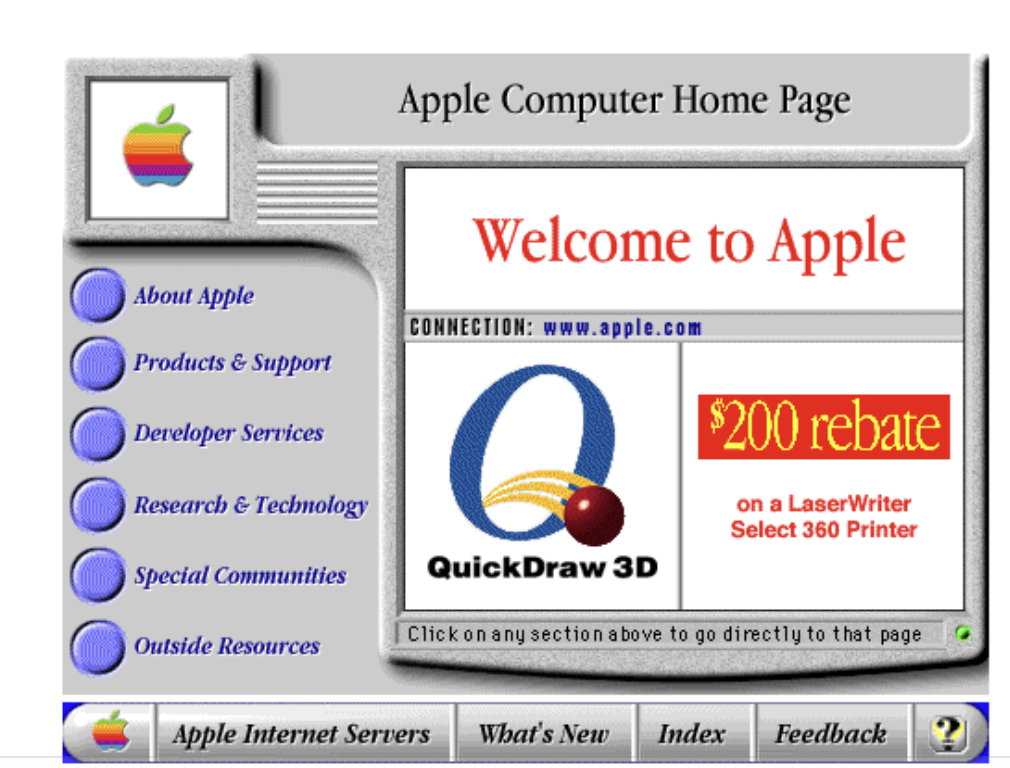
Apple's 1996 Homepage
And while the image looks silly now, it’s also nostalgic. For me, it brings me back to my early encounters with the internet, when the design discipline blooming around it felt fresh, weird, and a little bit wacky (and often tacky). A time before usability reigned supreme, where clicking around on the internet was full of strangeness, surprises, and friction. Angelfire sites with clashing colors, splash pages, Comic Sans and Lucida Handwriting, beveled buttons, and tiled backgrounds that looked like starry skies or crumpled paper.
Whatever you think of these trends or of Apple’s 1996 homepage, there’s one thing they most certainly are not: boring. Compare the 1996 homepage, with all its color, texture, and cheesy serif fonts, to Apple’s current homepage, which—while undeniably simple, readable, and functional —also looks very much like every other website out there and could fairly be described as boring. No shade, Apple (for anyone interested, you can browse old versions of Apple’s homepages here)

Apple's 2026 Homepage
Is boring a bad thing? Not always. But it does signal something: that perhaps design is ready for a shakeup.
Boredom as the antidote to boring
Art critic Dave Hickey said that art history is about boredom. “Art changes because we get bored.” The same might be said of design.
And AI may have finally clinched it. Now that it can spin up a clean, functional Apple-esque website in a matter of minutes, design, especially of websites and apps, may officially have reached a new apex of boring.
In a recent blog post for Adobe, designer Jessica Walsh describes the current state of things this way: “We’re being buried right now in competent work. AI-generated output is already everywhere: fine but frictionless. Without a genuinely creative human behind it, the results often have no soul.”
In a time when AI is eating creative work alive, when design is, as Walsh believes, becoming soulless, how can we, as creative people, resist the temptation to throw in the towel and dispense with our creative agency? Walsh goes on to describe the anxiety, restlessness, and ennui this new age of AI design produces, and the “fine but frictionless” boredom it creates. If Hickey is right, though, this very boredom is the antidote to boring. And it’s our task as creatives to nurture our creativity, not abandon it, and use it to create something new, and hopefully less boring.
And so, in this spirit, I recently asked my colleagues at Cake & Arrow, a team comprised of designers and strategists, in other words, creative people: how do you stay creative when we’re increasingly outsourcing creative work to AI?”?
This is what I heard.
Creatives on how to stay creative in the age of AI
1. Read books.
“I intentionally invest more time in tactile and physical interactions: I read lots of books (physical, not on a reader) and write all over the margins.” – Erin Eisinger, Strategist.
In a world of shrinking attention spans, short reels and TikToks, AI summaries, and constant pressure to optimize, reading a book can feel like an indulgence you haven’t earned. But don’t let anyone book-shame you. Reading may be indulgent, and dare I say enjoyable. Still, it’s also a way to build focus, to make space in our brains to think deeply and critically, and to gain a richer understanding of a topic, an era in history, a particular perspective, or, if you’re anything like me, the turns of phrase favored by 19th-century elites.
Opting for a physical book over a reader also has its benefits. Not only do physical books offer what, for many, is a much-needed break from screens, but research suggests that reading on paper improves comprehension and retention and can deepen our engagement with the text.
While reading itself may not typically be viewed as a creative practice, it can be a way to build focus, find inspiration, and carve out the mental space needed to sit with and struggle through a problem. In other words, reading can help us be more creative.
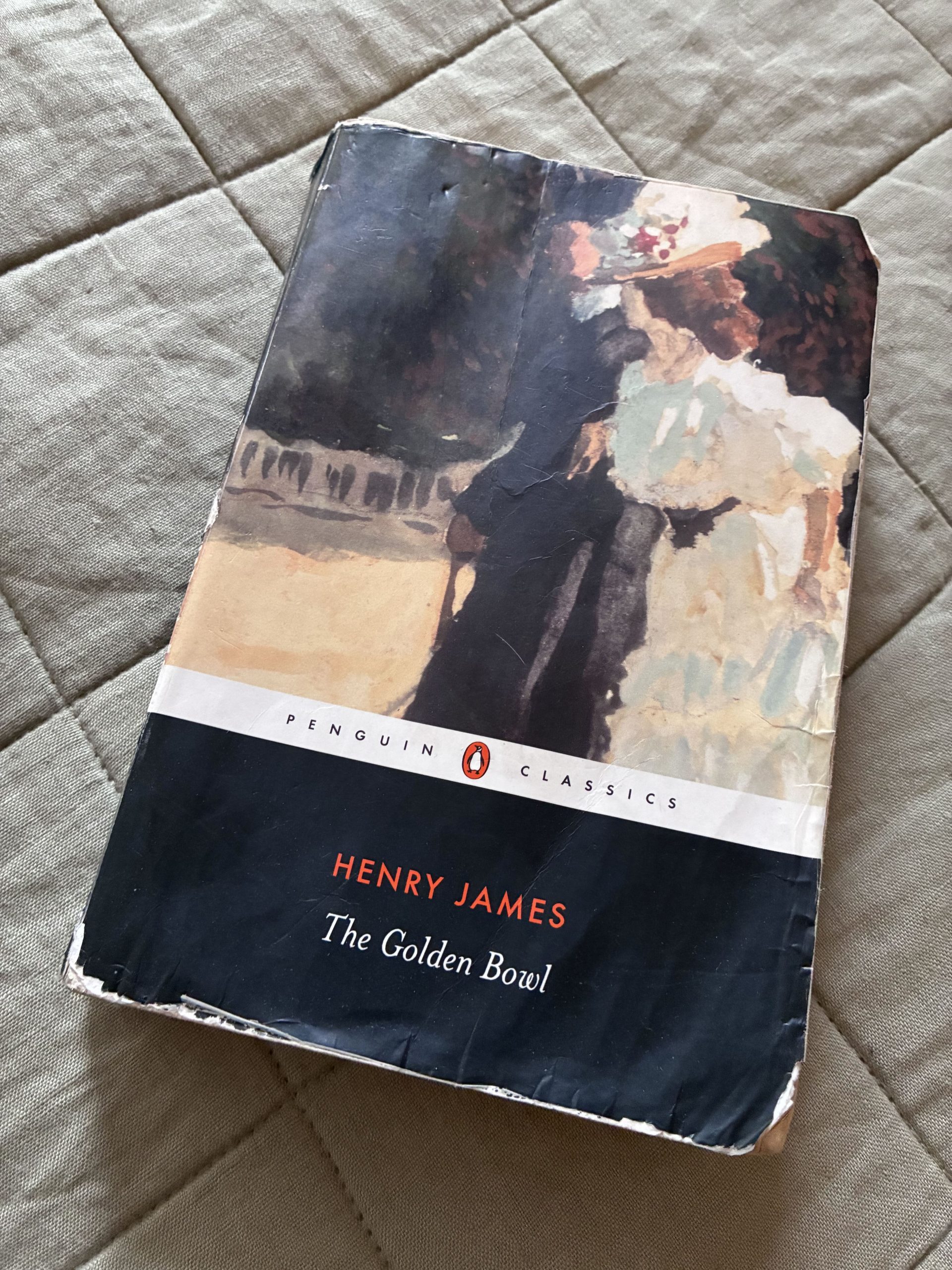
My much-loved copy of Henry James's The Golden Bowl, a novel I've been carrying around for years, reading intermittently, but still haven't finished
2. Find time for silence.
“The world is noisy, so we have to make the quiet ourselves.”– Spencer Orofino.
Between AirPods, podcasts, connected sound systems, portable Bluetooth speakers, and Alexa, it can be hard to find time for quiet; it has never been easier to fill every waking moment not just with sound, but with information. Times in our day when we once experienced silence—a morning shower, a walk around the block with the dog, an evening commute—we now often fill with the sounds of podcasts, audiobooks, or a playlist comprised of Spotify’s bottomless music library.
But creativity requires silence. Often, the best ideas pop into our heads in these moments of silence—when we are taking a shower, when we wake up in the middle of the night and can’t fall back to sleep, when our AirPods die while we are on a walk or a run and we’re forced to be alone with our thoughts. It can feel uncomfortable, but the brain needs time to process, to think, to freely connect ideas, not just to learn. Silence gives our subconscious room to speak to us, and often, it can surprise us.

Amanda, a product manager, blocking out the noise since 1990
3. Make things with your hands.
“For me, it’s pen and paper. Always has been… and if anything, it matters more to me now than ever.” – Josh Levine, Founder & CEO, Designer by trade.
Many designers came to the design profession as creative people looking for a career path. They started young, as artists — drawing, painting, crafting, making things with their hands. Sketching a beautiful building, shaping a ceramic vase, decorating cupcakes, sewing clothes, designing birthday card collages, illustrating a comic book, knitting a scarf, building an instrument by hand. Now that so much professional creative work happens on the computer and is assisted by technology, it’s easy, too easy, to neglect these more physical, tactile practices that brought so many designers into the profession in the first place.
Creating space in life to step away from a computer and nurture these creative practices for their own sake is one of the most important ways to exercise our creative muscles. And if you were to ask any of our designers, it’s often the very act of engaging in hands-on creative work that brings inspiration to their digital design work.
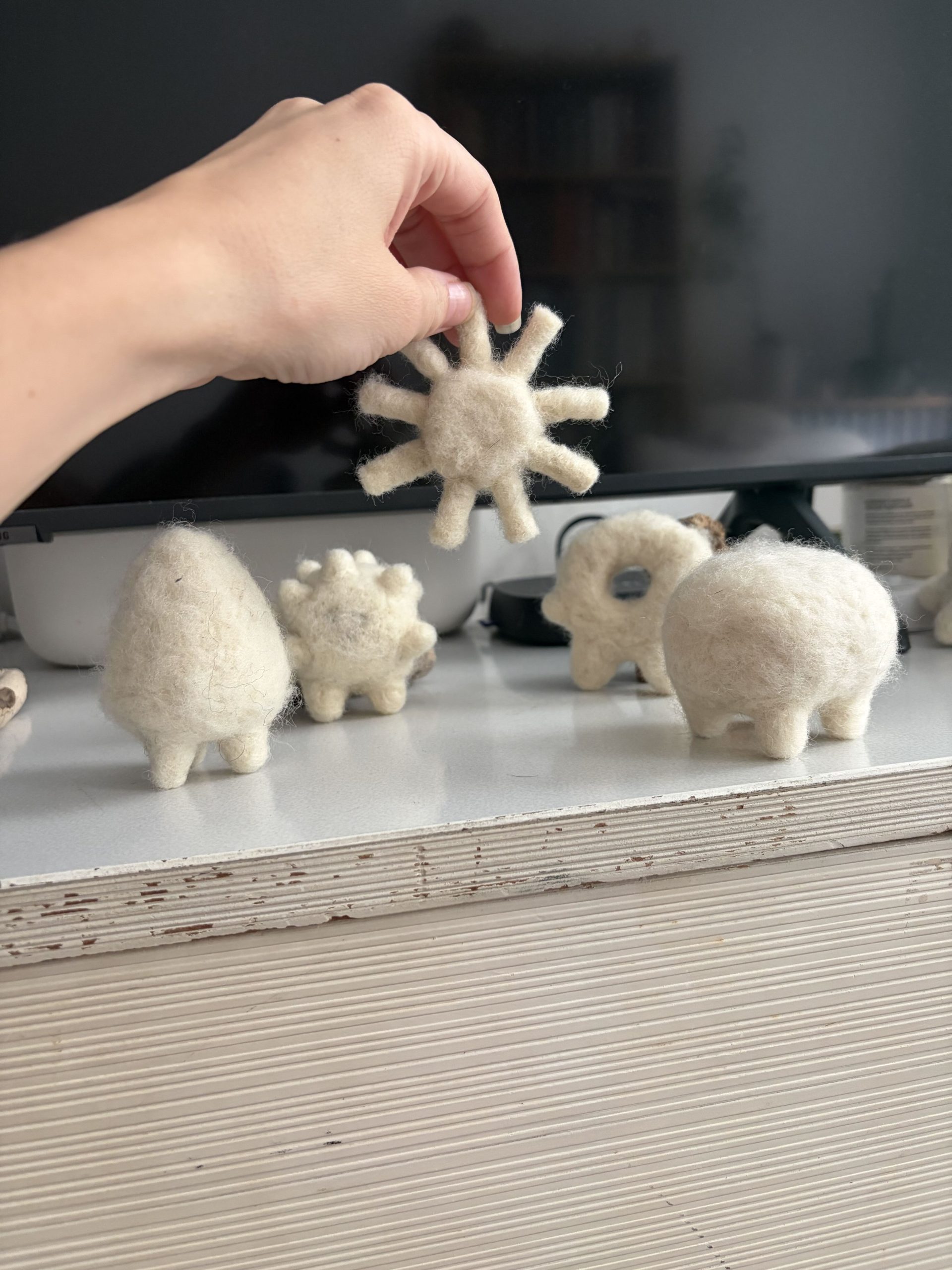
Cait Smith, a product designer, working on a hand-made mobile for her baby
4. Get out of your element.
“Leave your house. Leave your neighborhood. Leave your country—go see art and music in person.” Cait Smith, Designer
Being a remote, distributed team (as we are here at Cake & Arrow) can leave us with less opportunity to leave our homes, or even our offices or bedrooms. And I know we are not alone. Nearly seven years after the pandemic began, close to a quarter of the workforce still works remotely.
But getting out of your element—your computer, your home, your office, your phone, your city, your country, your routine—can push you into new ways of thinking. In a now-famous experiment conducted by Dr. Simone Ritter, she fitted participants with a Virtual Reality helmet, through which they viewed objects in a room that were breaking the laws of physics, appearing and moving in unexpected ways. When asked to perform creative tasks, participants scored higher after wearing the helmet—showing that when people encounter the unexpected, they become more creative.
But you don’t need to put on a virtual reality helmet or travel across the world to shake things up. Even changing the route you typically walk to the grocery store can have a similar effect. The French theorist Michel de Certeau wrote an entire essay about it, describing walking—especially walking against the grid, or what he calls “taking the hypotenuse”—as a creative act, a practice that can “invent spaces.”
Give it a try. Next time you are faced with a blank page or a daunting creative brief, make a point to get out of your comfort zone, to do something you don’t normally do, go somewhere you don’t normally go, talk to someone you don’t normally talk to, or walk down a block you don’t normally take and see what happens.
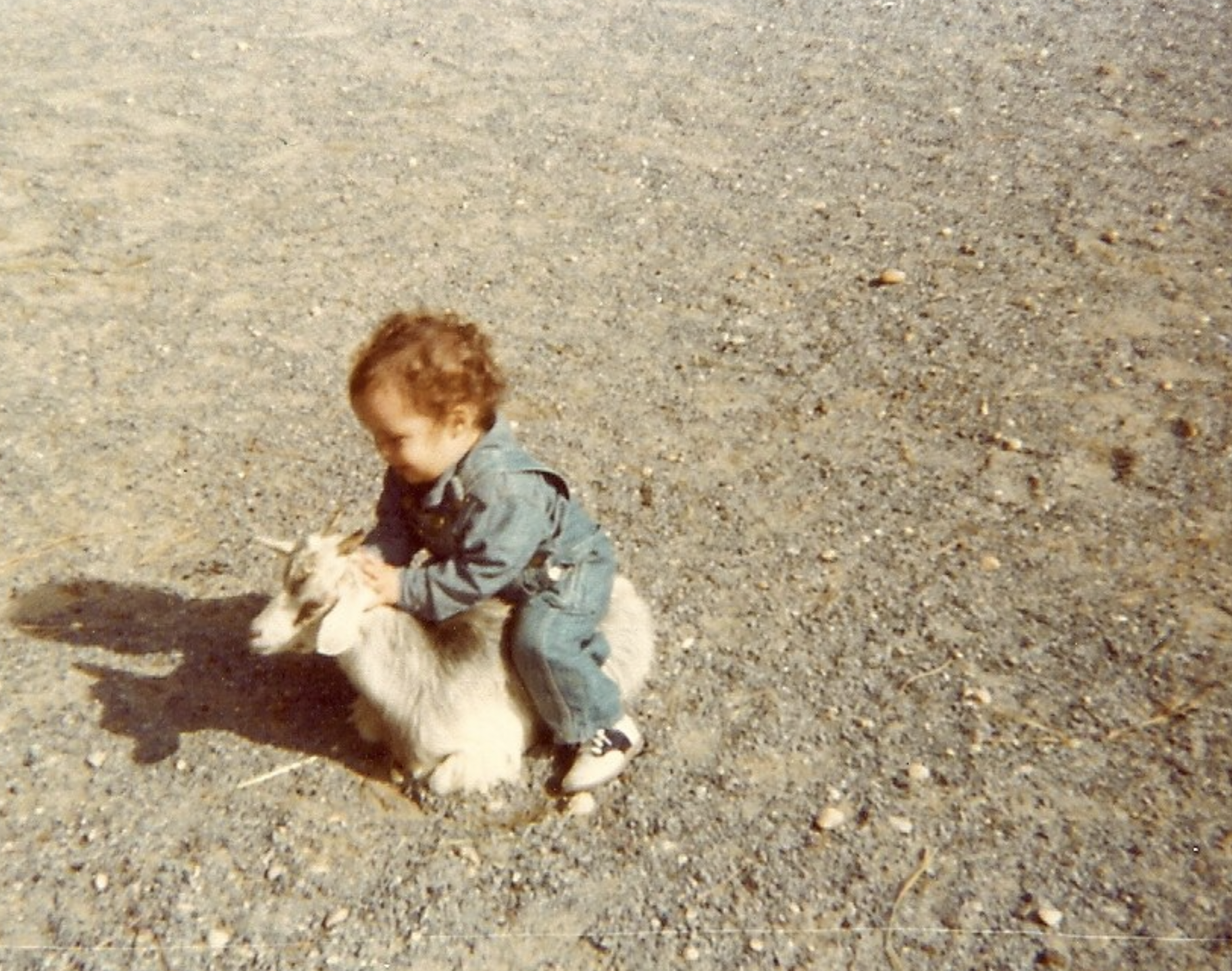
Josh, Cake & Arrow's founder, CEO and designer by trade, getting out of his comfort zone and riding a goat
5. Take your time.
“Sometimes I make a point to NOT use AI when I could. And I always walk away with something—maybe I become more immersed in a topic and actually retain more knowledge because I did it myself.” – Amanda Judkins, Product Manager
Life is busy, and most of us have a lot on our plate at work and in everyday life. In the world we live in today, efficiency and growth can often feel like the only metrics that matter. But moving slowly and deliberately, paying attention to detail, and building skill and expertise over time are essential not only to quality creative work, but to joy and fulfillment in our work. The Japanese have a word for people who do this: shokunin.
Shokunin translates literally to “craftsman.” It carries the spirit of what medieval guilds called a “master craftsman”: someone who, after years of apprenticeship under the guidance of elders, produces goods, food, or objects of exceptional quality. It’s a reminder that making something great takes time, attention, and effort.
While some activities may be better optimized — and even automated — by AI, the difficult and rewarding work of creating—designing—something special very well may not be one of them. So the next time you hit a block in that creative process and your instinct is to turn to AI, perhaps take a moment to sit with that discomfort or frustration and see where it leads. As the New Yorker writer Jia Lynn Yang recently said in an interview about writing, “If you’re having trouble, that’s actually what’s going to make the piece good.”
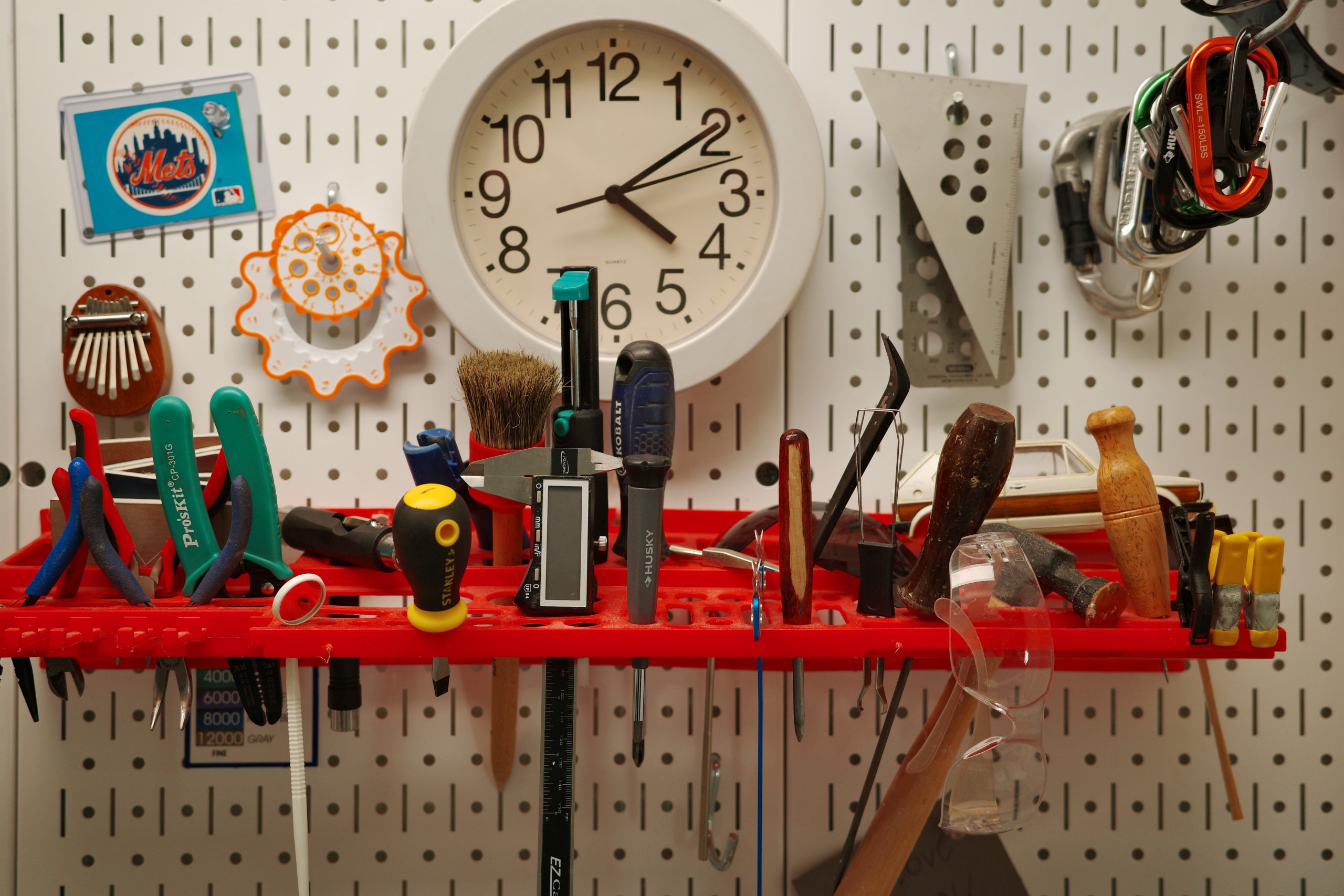
A tool rack belonging to Sam, a visual designer